Overview
- Driven by infrastructure, urbanization, and renewable energy, the Philippine steel market features surging demand but remains highly dependent on imports and global supply trends.
- For industrial developers, navigating these specific dynamics is critical to managing cost drivers and securing long-term supply stability.
The Philippines consumes around 10 million metric tons of steel each year, reflecting a market that is already large, active, and deeply embedded in the country’s construction and industrial growth.
This massive volume is pushing producers to expand capacity. But what are the key factors driving steel supply and demand in the Philippines?
In this article, we break down the core forces shaping the market for industrial project developers. For high-quality, reliable steel supply, Regan Industrial Sales, Inc. (RISI) stands as a trusted partner supporting critical construction and infrastructure needs.
Key Drivers of Steel Demand

Steel demand continues to strengthen as economies expand, cities grow, and large-scale development accelerates. Here are the key drivers of steel demand shaping this sustained growth.
Infrastructure “Build Better More” Program
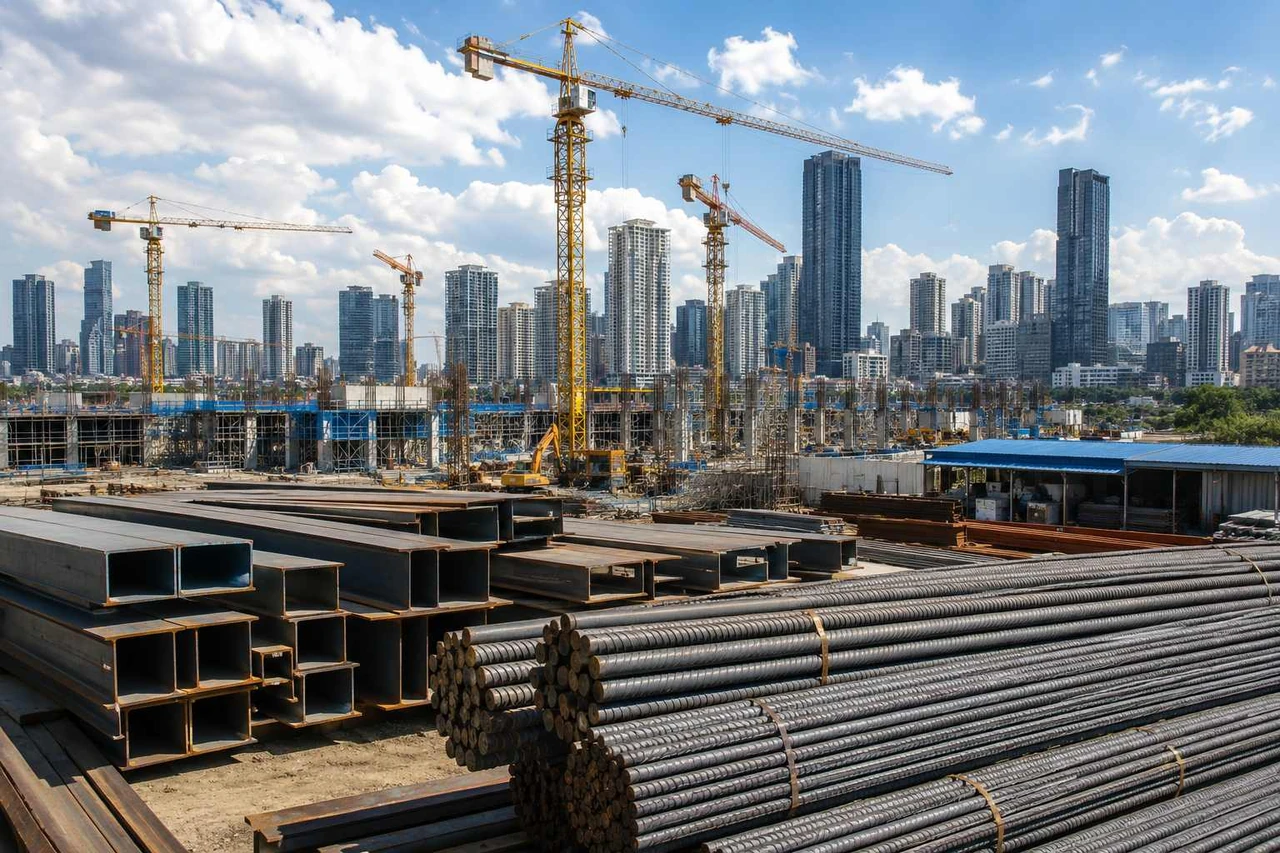
Anchored by the Philippine government’s ₱9 trillion+ infrastructure program, steel demand continues to rise, driven by sustained public investment in roads, bridges, airports, railways, and flood control systems nationwide.
These large-scale infrastructure projects in the country require significant volumes of structural steel, reinforcing bars, and fabricated components engineered for durability, safety, and load-bearing performance. As developments expand across the region, steel remains essential in strengthening national connectivity and resilience.
With each phase of construction, material requirements increase significantly, while stricter engineering standards further elevate specification levels. This creates consistent, long-term steel demand driven by multi-year infrastructure pipelines in the Philippines.
Urbanization and Real Estate Expansion
The Philippines is undergoing rapid urbanization and real estate expansion, with 54% of its population living in urban areas as of 2020, a share that continues to grow. Urban centers such as Metro Manila, Cebu, and Davao are being reshaped by rising residential towers, commercial hubs, and mixed-use developments driven by increasing population density.
To support this scale of vertical development, steel is widely used for its strength-to-weight ratio, flexibility, and structural performance, making it well-suited for high-rise construction.
As urban populations continue to expand, developers accelerate vertical construction, increasing steel consumption per square meter and sustaining a strong pipeline of private and public real estate projects nationwide.
Manufacturing and Industrial Growth
Industrial expansion in the country continues to strengthen steel demand through the development of factories, warehouses, logistics hubs, and production facilities that support both domestic and export-oriented industries.
As supply chains in the Philippines modernize, companies increasingly require larger, more durable industrial spaces designed for heavy equipment, operational efficiency, and long-term scalability. In response, steel framing systems are widely adopted for their speed of assembly, structural integrity, and adaptability to large-span industrial designs.
Meanwhile, growth in e-commerce, food processing, and manufacturing further accelerates warehouse construction across key economic zones in the country. As a result, each new facility significantly increases steel consumption, reinforcing steady demand driven by ongoing industrialization.
Renewable Energy Projects
The Philippines’ transition toward cleaner energy sources is creating new and expanding demand for steel across solar farms, wind installations, substations, and transmission infrastructure nationwide.
Steel plays a critical role in renewable energy systems in the Philippines, including mounting structures, wind turbine components, pylons, and support frameworks designed for long-term durability in exposed environmental conditions.
Renewable energy expansion and grid modernization are creating a new structural demand layer for steel in the Philippines. Beyond traditional construction, sustainable energy development now requires large-scale fabrication of high-strength, corrosion-resistant steel for transmission towers, distribution networks, and specialized energy components.
Key Factors Shaping Steel Supply

Here are the key factors influencing steel supply dynamics across markets, driven by trade flows, policy shifts, production capacity, and global economic conditions.
- High Import Dependence: Limited domestic capacity leaves the market vulnerable to global price shocks, shipping bottlenecks, and trade policy shifts.
- Localization Strategy: Expanding domestic manufacturing stabilizes supply chains, reduces reliance on imports, and accelerates responses to local demand.
- Sustainability and Green Steel: Stricter environmental standards are accelerating the shift toward low-carbon, recycled steel and cleaner production.
- Currency and Global Factors: Exchange rate fluctuations directly alter import costs, while global commodity cycles dictate pricing and procurement timing.
- Seasonality: Supply fluctuates with weather and building cycles, leading to periodic shortages or surpluses during peak construction seasons.
Key Takeaway
The key factors driving steel supply and demand in the Philippines are shaped by a powerful combination of infrastructure-led growth, rapid urbanization, industrial expansion, renewable energy development, and global supply-side influences, including import dependence, currency fluctuations, and seasonality.
The Philippine steel market pairs growing domestic demand with a highly sensitive global supply. As steel continues to drive national development, managing these market shifts requires a dependable partner. Regan Industrial Sales, Inc. (RISI) provides the consistent, compliant steel supply needed to protect your project timelines and budgets.
Contact us today for reliable solutions tailored to your project needs.