Overview
- Comparing deformed bars with other reinforcement options helps industrial developers select materials that support structural strength, safety, and long-term cost efficiency.
- Deformed round bars are widely used for their ribbed surface, which improves concrete bonding, while alternatives like plain bars, welded wire mesh, or specialty systems may suit specific project requirements depending on load demands, compliance, and lifecycle value.
Comparing deformed bars and other reinforcement options is essential for industrial and infrastructure projects in the Philippines, where structures must perform under heavy loads, constant vibration, and varying ground and environmental conditions.
Across the country, reinforced concrete remains the dominant construction system because it is practical, widely understood by contractors, and adaptable to varying project scales—from small provincial buildings to large infrastructure works. Within this system, deformed round bars are the most commonly used reinforcement, while alternatives such as plain bars, welded wire mesh, and steel fibers are applied depending on cost, design requirements, and supply accessibility.
Choosing the right reinforcement material depends on performance demands, cost efficiency, availability, and long-term durability requirements.
Improve Concrete Bond Strength

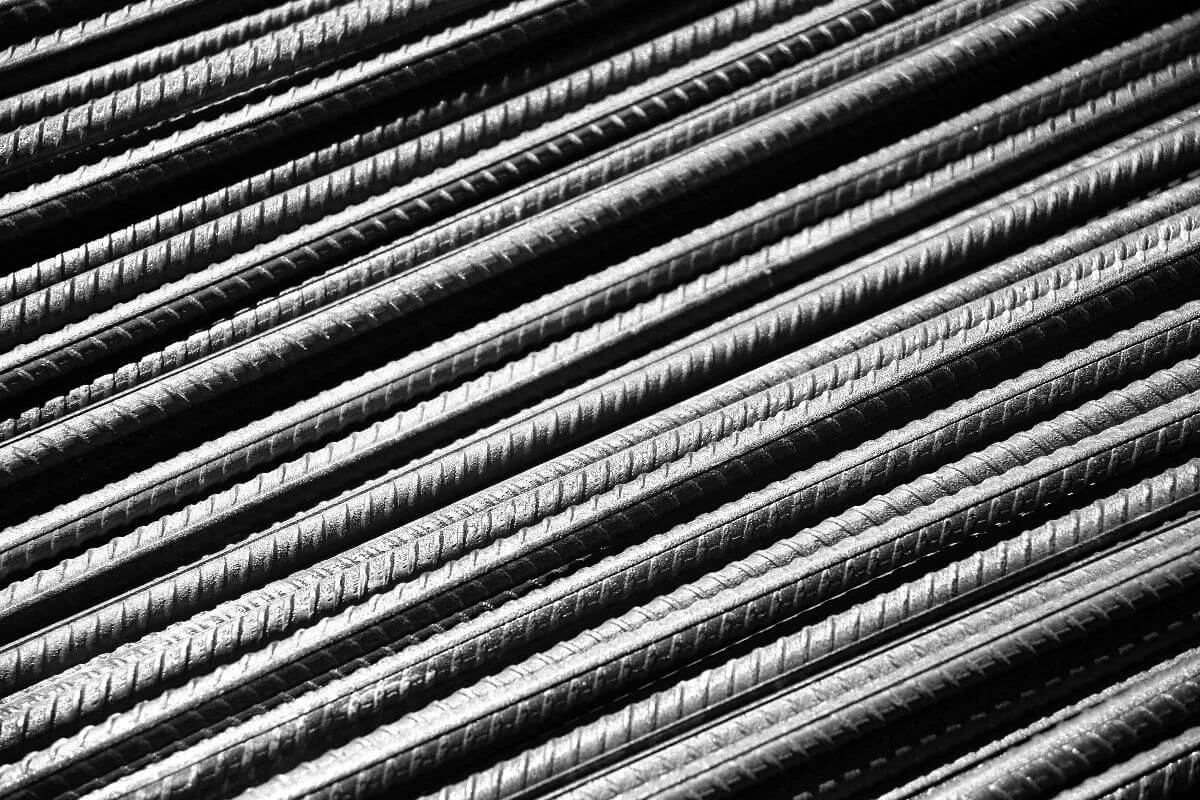
Deformed round bars are designed with surface ribs that allow stronger mechanical bonding with concrete. This ensures both materials work together when carrying structural loads.
Compared to smooth bars, ribbed reinforcement provides better resistance to slippage under vibration, tension, and repeated loading—conditions commonly experienced in industrial floors, machine foundations, loading bays, and structural frames.
These bars are manufactured under standards such as ASTM A615/A615M, ensuring consistent tensile strength and deformation performance for structural use.
Provide Reliable Tensile Reinforcement
Concrete is strong under compression but weak under tension, which is why steel reinforcement is essential in Philippine construction practices.
Deformed bars help carry tensile forces in beams, slabs, and columns, making them suitable for buildings that experience constant loading from vehicles, storage systems, or machinery.
This reliability is particularly important in developing areas where structures are expected to perform under long service life conditions with limited opportunities for major structural upgrades or retrofitting.
Offer Better Anchorage Than Plain Round Bars
Plain round bars are still used in some low-cost or non-critical applications due to availability or cost considerations. However, their smooth surface results in weaker bonding with concrete.
In Philippine construction, this often means plain bars are limited to lighter applications or require additional design compensation to achieve acceptable performance.
Deformed bars, on the other hand, provide stronger anchorage and more efficient stress transfer, making them more suitable for structural components where safety margins and durability are critical.
Support Heavy-Duty Industrial Applications
Deformed round bars are often preferred for structural concrete in demanding environments because they can support a wide range of load-bearing applications.
Foundations and Footings
Industrial foundations need reinforcement that can distribute loads from structural columns, equipment, and floor systems. Deformed bars help control cracking and improve stability.
Slabs and Flooring
Warehouses, plants, and logistics hubs often require slabs that can withstand forklift traffic, storage loads, and machinery vibration. Deformed bars can strengthen slabs where high structural performance is required.
Beams and Columns
In reinforced concrete frames, deformed bars help beams and columns resist bending, tension, and lateral forces. This is important for long-term safety and serviceability.
Retaining and Structural Walls
For retaining walls and structural walls, reinforcement helps resist soil pressure, water pressure, and lateral forces. Deformed bars are commonly used where strong concrete-steel interaction is required.
Balance Upfront Cost With Long-Term Performance
Cost considerations in industrial projects go beyond the initial price of reinforcement. Developers must also account for installation efficiency, maintenance risks, structural performance, and potential repair costs over the lifecycle of the structure.
Plain round bars may seem simpler, but they offer lower bond strength for structural applications. Welded wire mesh can be effective for certain slab works or lighter loads, but it is not always suitable for heavy-load conditions. Steel fibers help control shrinkage cracking but are not a full replacement for conventional reinforcement in major structural elements.
Reinforcement materials that combine strength, availability, and reliable performance are often preferred for industrial projects. When sourced from a dependable steel supplier, they also help reduce procurement risks and support consistent, efficient project execution.
Require Supplier Consistency and Specification Control
The performance of reinforcement depends not only on the material type but also on whether the supplied steel meets the required grade, size, and standard. Inconsistent reinforcement can lead to design issues, delays, rework, or compliance concerns.
Project teams should verify bar diameter, grade, length, documentation, and availability before procurement. For large industrial projects, supply continuity is also important because delayed reinforcement deliveries can affect foundation work, concrete pouring schedules, and overall timelines.
Working with an experienced steel supplier in the Philippines helps developers maintain better control over material sourcing and project coordination.
Selecting Deformed Round Bars for Reliable Concrete Reinforcement

Ribbed steel reinforcement bars are widely used in industrial projects due to their strong concrete bonding, reliable tensile performance, and proven suitability for load-bearing applications. Other reinforcement options may serve specific purposes, but selection should always depend on engineering requirements, site conditions, and long-term value.
For industrial developers, the objective goes beyond choosing the lowest-cost material. The priority is to use reinforcement that ensures safety, durability, regulatory compliance, and efficient construction outcomes.
Key Takeaway
Comparing deformed bars and other reinforcement options shows that deformed round bars are often the stronger choice for structural concrete applications that require reliable bonding, tensile strength, and long-term performance.
For dependable steel supply requirements, partner with Regan Industrial Sales Inc., our team can help you source the right steel products for industrial, commercial, and infrastructure projects. Contact us today to request a quotation or discuss your project requirements.