

What are the structural design tips for maximizing H-beam performance?
- Account for dual-axis moment of inertia
- Control lateral-torsional buckling (LTB)
- Integrate composite design
- Refine span-to-depth ratios
- Optimize connection stiffness
Overview
- Maximizing H beam performance requires strategic engineering, including accounting for dual-axis loads, controlling lateral-torsional buckling, integrating composite designs, optimizing span-to-depth ratios, and refining connection stiffness.
- However, optimal design relies entirely on material quality—sourcing verified, high-grade steel from reliable suppliers like Regan Industrial ensures structural safety, efficiency, and project timeline adherence.
Using structural steel that misses real-world load requirements quickly derails a project’s timeline and budget. H beams deliver superior load capacity and bending resistance due to their wide flanges and vertical web, but achieving maximum strength without over-engineering demands precise specification and strategic planning.
Applying practical structural design tips for maximizing H beam performance allows engineers to significantly optimize load distribution, lateral stability, and overall efficiency. Yet even the most rigorous design performs only as well as the underlying material quality—making your choice of steel supplier just as critical as the load calculations themselves.
Account for Dual-Axis Moment of Inertia
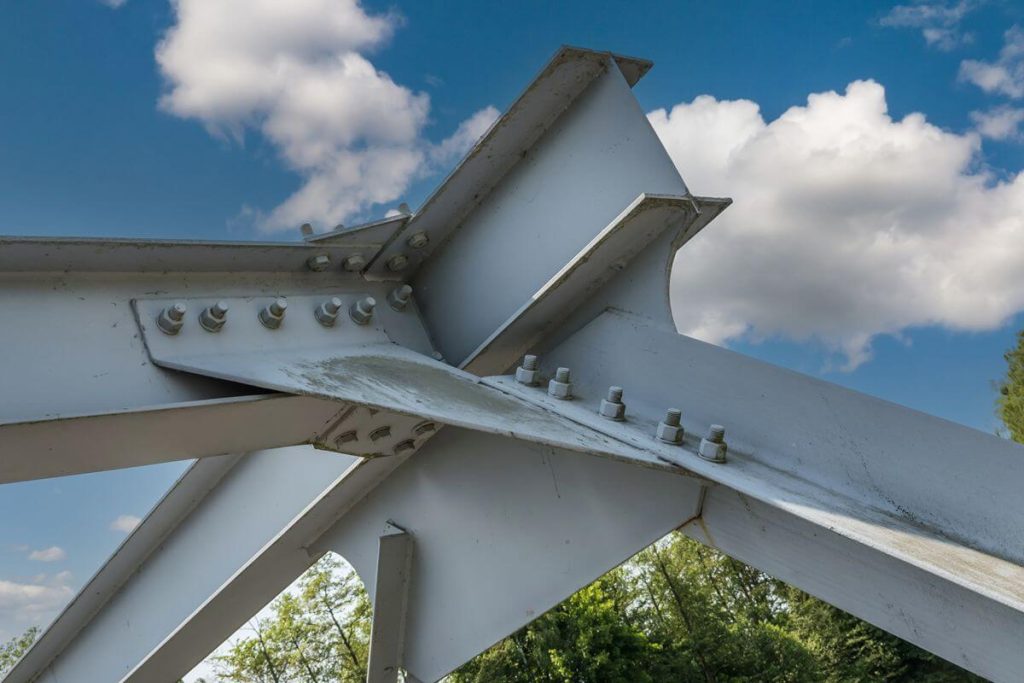
When an H beam experiences loads from different directions, you need to account for its resistance to bending about both the strong and weak axes. The moment of inertia indicates how the beam’s cross-sectional shape resists bending; a larger value generally provides greater stiffness about that axis.
Review the beam’s section properties against the expected loading conditions rather than sizing it based only on vertical loads. For structures exposed to wind, equipment loads, or other lateral forces, considering both axes helps you select a section that limits unwanted deflection and performs reliably under combined loading.
Control Lateral-Torsional Buckling (LTB)
As part of maximizing an H beam’s bending performance, you also need to consider how the beam behaves when it is not adequately supported along its length. Lateral-torsional buckling (LTB) occurs when a beam moves sideways and twists under load, reducing its ability to resist bending.
This risk increases in H beams with long, unsupported spans or insufficient bracing. You can prevent lateral-torsional buckling (LTB) by adding adequate lateral restraint via floor systems, cross-bracing, or secondary beams.
When specifying H beams—especially for long-span or open industrial layouts—evaluate unbraced length, section properties, and expected loads to ensure the beam reaches its full bending capacity safely.
Integrate Composite Design
Combining an H beam with a concrete slab can allow the two materials to work together as a composite structural member. If your design permits composite action, shear connectors transfer forces between the steel beam and concrete, allowing the slab to contribute to the beam’s bending resistance.
This can increase stiffness and load-carrying capacity while potentially reducing deflection. When evaluating the system, account for connector design, slab thickness, concrete properties, construction sequence, and the degree of composite interaction.
For commercial or industrial floors, properly designed composite construction can improve structural efficiency without simply increasing the steel section size.
Refine Span-to-Depth Ratios
The relationship between an H beam’s span and depth directly affects stiffness, weight, deflection, and material efficiency. For a long span, choosing a section that is too shallow can increase deflection and require additional reinforcement or a heavier beam.
A deeper section may provide greater stiffness with less additional material, but it must still fit architectural, mechanical, fabrication, and clearance requirements. Compare different section depths against the project’s loading, allowable deflection, and serviceability criteria to find an efficient solution. Refining this ratio helps balance structural performance and material use rather than selecting a beam based on strength alone.
Optimize Connection Stiffness
The way you connect an H beam to columns, braces, or other members affects how forces and moments travel through the structural frame. A connection that is too flexible can introduce greater rotation and deflection than anticipated, while an overly rigid connection may transfer larger moments into adjacent members. You should therefore design the connection based on the intended structural behavior, considering bolts, welds, plates, stiffeners, and connection geometry.
For large industrial or infrastructure structures, coordinating beam and connection design helps ensure the assumptions used in structural analysis match actual behavior. This can improve load transfer, frame stability, and overall structural efficiency.
Why These Design Principles Only Matter If the Steel Delivers
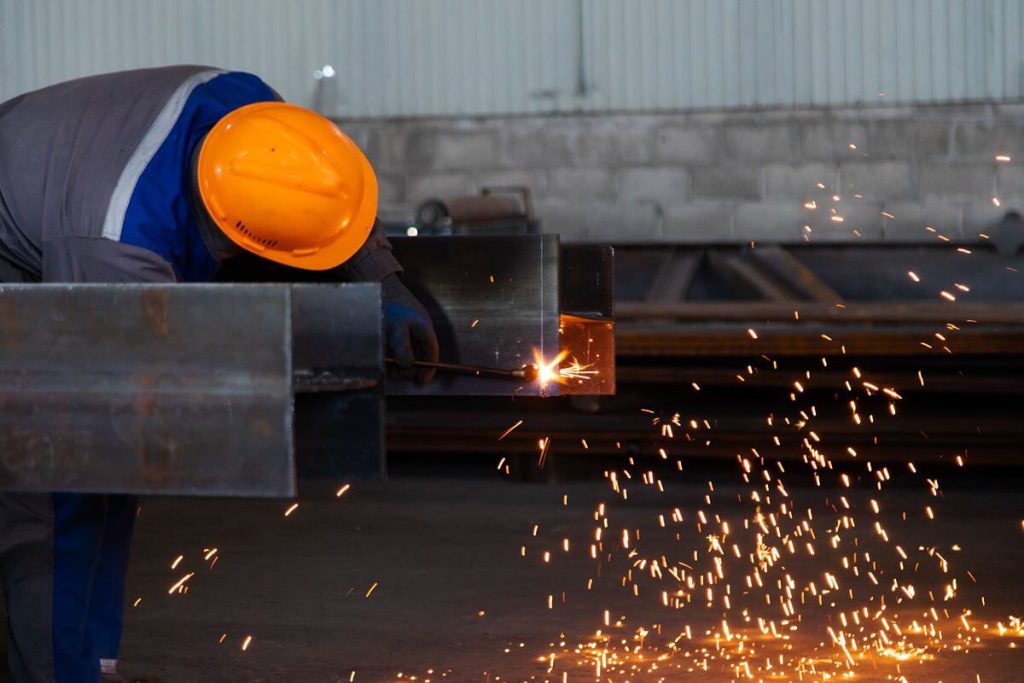
Precise calculations mean nothing if delivered H beams fail to match design specifications. Dimensional variations, substandard materials, or unverified mill certifications directly compromise structural integrity, and no amount of design optimization can offset poor steel quality.
Sourcing directly impacts structural outcomes—making supplier selection a critical engineering decision, not a routine procurement task.
Why Project Engineers and Contractors Choose Regan Industrial
When your design relies on precise section properties and predictable material behavior, your steel supplier directly influences structural integrity—serving as a core engineering partner rather than a simple vendor.
Verified Specifications
Every H beam aligns strictly with your project requirements, ensuring on-site components deliver the exact section properties your engineers calculated.
Consistent Material Quality
Controlled chemical composition and uniform manufacturing eliminate risks of premature deflection, buckling, or joint failure caused by substandard steel, preserving the integrity of your design work.
Project-Ready Supply Coordination
Reliable logistics sync directly with your schedule, preventing delivery gaps and timeline delays on time-sensitive builds.
Versatile Application Support
Whether building industrial facilities, commercial complexes, or infrastructure, project teams access H beams tailored to their exact loading, span, and connection demands.
Key Takeaway
Using the right structural design tips for maximizing H beam performance can help create stronger, safer, and more efficient structures. Proper beam selection, load distribution, connection design, and installation all contribute to better performance and long-term durability.
At Regan Industrial, we provide high-quality H beams and structural steel designed to meet the demands of construction, industrial, and infrastructure projects. Let us help you identify steel products that align with your project’s specifications and requirements. Contact us now and find the right solution for your next project.